
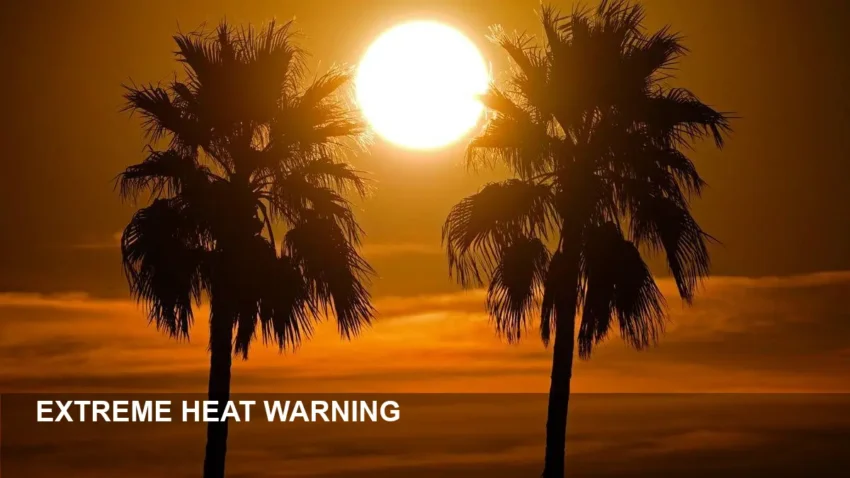
An extreme heat warning is in effect for metro Phoenix as triple-digit temperatures bring record-breaking early-season heat across Arizona and neighboring states. The alert matters because heat this early catches people and infrastructure off-guard—prompting trail closures, hospital warnings and multi-state advisories.
What’s happening, when and where
The National Weather Service issued an extreme heat warning for metro Phoenix starting at 11 a.m. on March 19 and running through 8 p.m. on March 22. Meteorologist Katherine Berislavich said, “We’re forecasting a high of 104 for March 19, which would break the current record of 96 degrees set in 2017.” She noted the week already saw a 102-degree reading — the earliest 100-degree day on record for Phoenix.
Beyond metro Phoenix, the NWS warns of unseasonably high temperatures across parts of Arizona, California and Nevada through the coming days. Forecasts include triple-digit highs in many valley and desert communities — with some pockets of southern California desert and parts of Nevada also projected to approach or exceed 108–110°F.
Areas of special concern
- Metro Phoenix neighborhoods and northwest/east valley communities — highs into the upper 90s and low 100s.
- Lower elevations of the Grand Canyon and Yavapai valleys — 100°F+ expected in spots.
- Desert regions in southern California and the Lake Mead area — extreme heat advisories overlapping state lines.
Closures and immediate impacts
The city limited access to popular hiking trails from March 18–22 between 8 a.m. and 5 p.m., including Camelback Mountain and Piestewa Peak Summit Trail, to reduce heat-related rescues. The NWS also issued specific guidance for Grand Canyon hikers: “day hikers on Bright Angel Trail should descend no farther than 1 1/2 miles from the upper trailhead,” adding that “between the hours of 10 AM and 4 PM, hikers should be out of the canyon or at Havasupai Gardens or Bright Angel campgrounds.”
Health warnings and safety steps
Valleywise Health physicians say early-season heat is especially risky because bodies haven’t acclimated. Dr. Paul Pugsley warned visitors may mistake heat illness for simple fatigue and urged caution.
Public-health and weather officials advise: drink water and electrolytes consistently, avoid alcohol and high-caffeine drinks, schedule outdoor work or exercise in early morning or evening, wear lightweight clothing and use sunscreen. Never leave children or pets in vehicles; car interiors can reach lethal temperatures in minutes.
Those who need a cool place can call 2-1-1 for rides to cooling centers. Renters should also know landlord temperature requirements: units with air conditioning must be kept at or below 82°F, and units with evaporative coolers at or below 86°F; complaints can be filed at 602-262-7210.
Why it matters and what’s next
Early heat spikes increase emergency calls, strain medical centers and can overwhelm unprepared residents and visitors. Expect forecasts to be updated through the weekend — check local NWS advisories before planning outdoor activities and follow local closures and public-health guidance.