
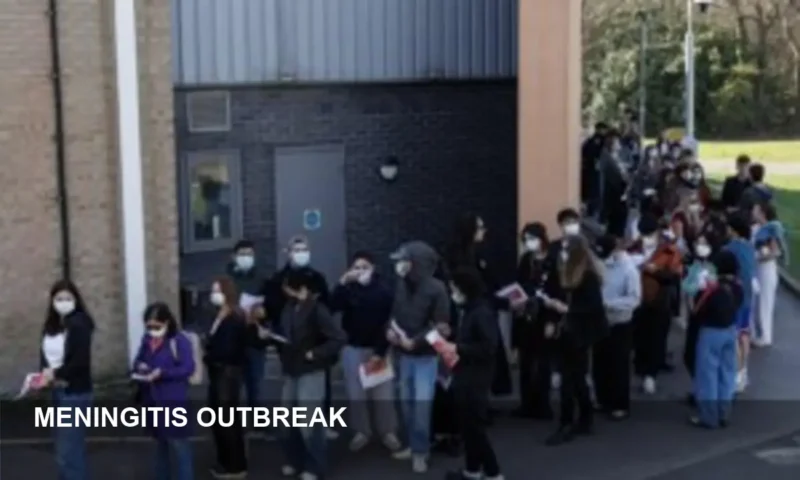
Health officials are racing to contain a meningococcal meningitis outbreak tied to a Canterbury nightclub as students and residents across Kent scramble for antibiotics and MenB vaccines. The cluster has left at least two young people dead and prompted a large-scale public-health response, underlining how quickly bacterial meningitis can spread in crowded social settings.
What happened — who, where, when
By March 20, UK health authorities said they had been notified of 18 confirmed cases and 19 probable cases linked to a cluster first detected among students at the University of Kent and Canterbury Christ Church University.
Officials have focused contact tracing on people who attended Club Chemistry in Canterbury on March 5, 6 or 7 — dates public-health teams say likely seeded the outbreak. Local hospitals have admitted all reported patients; two young people have died.
How health services are responding
The UK Health Security Agency (UKHSA), working with Kent county public-health teams, has offered antibiotics to close contacts and run an emergency vaccination campaign targeting the MenB strain implicated in the cluster. In Kent more than 9,800 courses of antibiotics and about 2,360 vaccine doses have already been administered to eligible people, health officials say.
Health secretary Wes Streeting visited the area and said vaccination efforts will expand to include students who travelled home and anyone who attended Club Chemistry from March 5 onwards, along with pupils at affected local schools.
Why this spread was swift
Public-health leaders point to nightclub conditions — crowded dance floors, shared vapes and drinks, close contact and kissing — as prime drivers for transmission of Neisseria meningitidis, the bacterium that causes meningococcal disease.
“What probably happened in the club is you had loads of people in close contact, probably sharing vapes, sharing drinks,” said Anjan Ghosh, director of public health at Kent county council. Students who were there described chaotic scenes as the outbreak became public: videos of emergency responders circulated and many left campus suddenly.
Voices from the community
Patients and families have described terrifying symptoms. “She could hardly move, she was in a foetal position. She was so cramped up and sore,” said Dale Skinner, whose daughter Tyra was hospitalised and treated with antibiotics and fluids.
Club owner Louise Jones-Roberts said she was contacted by UKHSA after a confirmed case among customers and urged the venue to alert patrons: “We’ve just got to tell people now what the symptoms are and what to do if they’ve got them.”
Context and what comes next
Most confirmed infections in the cluster are the B strain, which is less common than other meningococcal types but was responsible for this outbreak. Experts say rapid antibiotic prophylaxis and targeted MenB vaccination are the right response to halt spread.
Public-health teams warn that meningitis incubation runs from about two to 10 days, so new cases from secondary transmission are still possible in the short term. Universities have postponed exams and offered on-campus clinics; students who travelled home are being contacted for vaccination where appropriate.
Why it matters
The outbreak highlights both the speed with which bacterial meningitis can incapacitate otherwise healthy young people and the role of vaccination in preventing campus clusters. Health officials urge anyone who attended the club on the specified dates or who develops severe headache, neck stiffness, fever or a non-blanching rash to seek urgent medical attention.