
Across faith, education and geopolitics this week, “mercy” has become a flashpoint — invoked as a call to compassion, a program of spiritual formation and, in one case, a controversial justification for violence. The overlap helps explain why debates about mercy matter now: they shape public language, policy and how communities heal or fracture.
What happened: three very different uses of mercy
Pentagon service and a contentious line
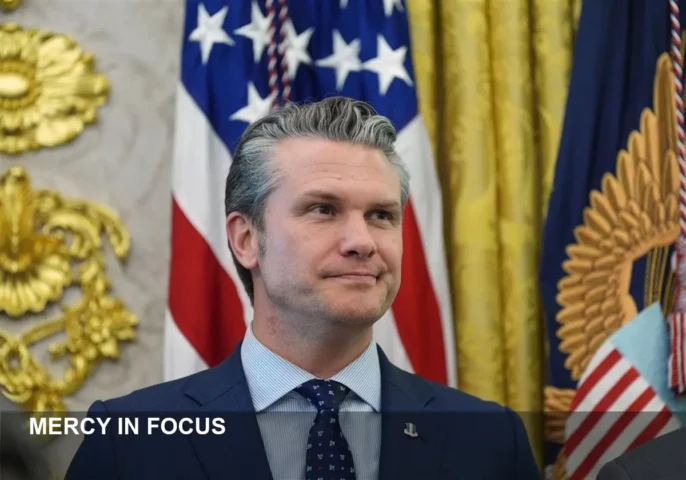
At a recent Pentagon Christian service, commentator Pete Hegseth prayed for violence “against those who deserve no mercy,” a line that has drawn attention and debate over the language of reprisal being used in a religious setting. The remark highlights how appeals to mercy — or its withdrawal — can inflame public disagreement when mixed with national-security or military settings.
Divine Mercy University launches a School of Spiritual Direction
On March 25, 2026, Divine Mercy University announced the launch of its School of Spiritual Direction and the new “Preparing Our Hearts” foundational courses. The program is meant to deepen prayer life and prepare people for spiritual accompaniment, with no formal prerequisites and graduate-level rigor.
Fr. Charles Sikorsky, LC, JD, JCL, university president, said, “The Church has a continual need for men and women who are deeply formed in prayer and capable of attentive listening to the movements of the Holy Spirit.” Dr. Harvey Payne, DMU’s VP of Academic Affairs, framed the school as responding to a Christian need for accompaniment and preparing individuals “for faithful service to others.” Director Maria Brackett added that the courses will strengthen participants’ relationship with the Lord, whether or not they pursue a certificate.
Venezuela’s amnesty and political reconciliation
In Venezuela, acts described as mercy — including the release of political prisoners and a National Assembly amnesty law — are being used as tools in a fragile transition. The reporting notes that the amnesty might cover hundreds of detainees and that its rollout has already nudged the public to assert civil liberties, from strikes to protests.
Human rights activist Orlando Viera-Blanco argued that amnesty can limit a regime’s capacity for coercion and “weakens its monopoly on fear,” while cautioning that amnesty alone is not a substitute for truth, accountability and reparations.
Why it matters now
These three snapshots show mercy functioning three ways: as a spiritual practice being taught and institutionalized; as a political instrument that can open space for reconciliation; and as a contested moral claim that can justify harsh action when invoked defensively.
For faith communities, the DMU launch signals growing institutional investment in trained spiritual accompaniment and formation. For nations emerging from conflict, Venezuela’s amnesty illustrates the tightrope between offering clemency and demanding accountability. And in civic life, the Pentagon episode underscores the risks when religious language is used to endorse punitive outcomes.
What to watch next
- Divine Mercy University plans expanded offerings by Fall 2026 and will begin admissions into its certificate pathway.
- Venezuela’s amnesty process will be watched for steps toward truth commissions, reparations or renewed repression.
- Public and media responses to the Pentagon service may prompt debate about the role of religious expression in government settings.
Mercy is not just a theological term — it is political, educational and civic. How institutions and leaders define it now will shape accountability, reconciliation and the language available to communities seeking both justice and healing.