
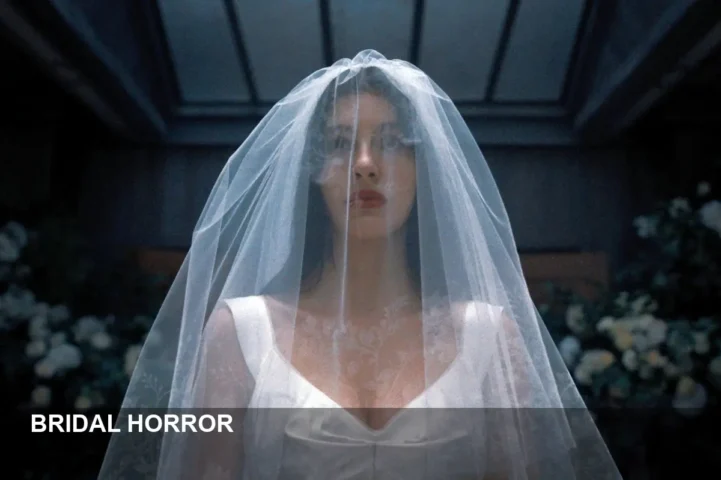
After weeks of speculation about the Duffers’ next move, Netflix has quietly released Something Very Bad Is Going To Happen — and early reaction is polarized. Critics praise Camila Morrone’s lead turn but fault the series’ slow-burn plotting and what some call an overreliance on atmosphere over payoff.
Netflix’s episode credits list Haley Z. Boston as the creator with Ross and Matt Duffer attached as executive producers, and the show centers on Rachel (Camila Morrone), a bride-to-be who begins experiencing vivid, terrifying visions in the days before her wedding at her fiancé’s sprawling family cabin. The first episode drops viewers into a dark, snow-swept road trip, a creepy roadside bar and a house full of taxidermy and family secrets — visual hooks that the show leans on heavily.
The series opens with a striking image: a woman in a wedding dress walking into an atrium, then suddenly flashing back through the events that led there. That framing sets the tone. Scenes oscillate between domestic banter and unnerving intrusions — a child left alone in a running car, a man peering into a bathroom stall, a warning scrawled on a wedding invite: “DON’T MARRY HIM.” The cast includes a roster of familiar character actors playing the groom’s parents and siblings, and while the household eccentricities are frequently unnerving, they don’t always add up to a satisfying mystery.
Performance is the clearest strength. Morrone anchors the episodes, delivering a layered portrayal of someone whose confidence is fraying under the weight of grief and premonition. Supporting players make memorable impressions in small bursts, but many viewers say those moments feel “pilot-y” rather than part of a coherent whole.
Critics are split. Some appreciate the slow-burn approach and the show’s willingness to let dread accumulate; others describe it as mood-driven with limited narrative payoff, calling the pacing indulgent and the supporting characters occasionally cartoonish. One early consensus even recommended skipping the series, arguing that jump scares and needle-drop music can’t fully replace a tighter story arc.
Is the Duffer stamp missing? That’s the debate online — fans expected a post-Stranger Things project that might recapture a similar mix of nostalgia and escalating terror. Instead, the Duffers here serve as backers rather than hands-on showrunners, and the creative voice belongs to Boston. Some viewers suggested that casting a genre regular such as Victoria Pedretti might have signaled a bolder horror direction (she’s often invoked in discussions about contemporary TV scream queens), but this series deliberately puts the emotional load on a single, newer lead.
Industry implication: the Duffers’ pivot to executive-producing smaller, adult-focused horror underscores a shift in prestige TV—streamers are now betting that auteur-driven mini-series can carry name-brand cachet even without the original show’s ensemble thrills. That strategy can work, but only if the central mystery sustains curiosity over multiple episodes.
What’s next? If you watch, give the show a few episodes to find its rhythm — the set-up hints at deeper family secrets and a mythology around a childhood legend called the “Sorry Man,” which the writers will need to develop beyond spooky tableaux. For viewers who prize character-driven dread and a strong lead performance, it’s worth a try; for those after a relentless string of scares, temper expectations.