
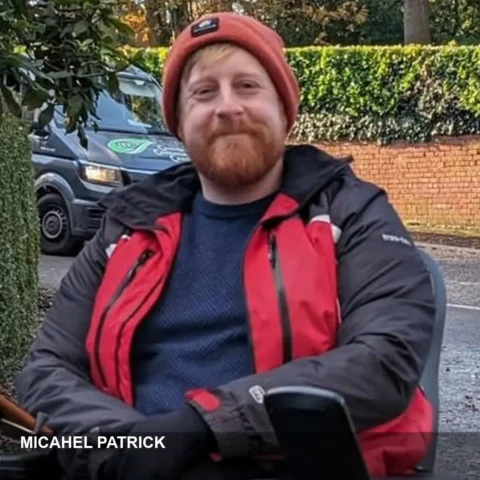
Michael Patrick died April 7, his wife Naomi Sheehan announced on Instagram on April 8, ending a three-year fight with Motor Neurone Disease that he made public and used to drive awareness. His Instagram tribute said he “passed peacefully surrounded by family and friends” after 10 days in hospice care in Belfast—words that underlined how closely the actor’s final weeks were held by those closest to him.
Patrick, 35, who appeared as a Wildling in Game of Thrones season 6 and had credits on This Town and My Left Nut, was also a playwright whose recent work drew directly from his illness. He was diagnosed with MND in February 2023 after noticing balance problems while performing at the Dublin Fringe and later confirmed on podcasts and in interviews that his family carries a rare, inherited form of the disease (the FUS gene).
He publicly described both grim prognosis conversations and small clinical victories: after entering a drug trial in 2023 he told the Brain and Life podcast that he could “now wiggle my right foot [and] toes for the first time in about two years,” even as breathing and arm strength declined. In February 2026 he announced via Instagram he would not proceed with a tracheostomy — largely because staffing shortfalls would have kept him in hospital for months — and thanked supporters for more than £110,000 raised on GoFundMe to help cover specialist care.
Patrick’s wife Naomi wrote that Mick was “an inspiration to everyone who was privileged enough to come into contact with him,” praising his laughter and spirit. Fans and colleagues responded to the Instagram post with tributes overnight, sharing memories of a performer who brought honesty and humor to difficult subject matter.
Patrick’s experience highlights two larger pressures in British and Irish care systems: rising visibility of rare genetic MND cases like FUS has coincided with growing demand for clinical trials and for home hospice staffing—gaps that families are increasingly forced to fill with crowdfunding and advocacy. That tension between medical hope and practical limits may shape funding and policy discussions about MND care in the coming year.
What he said about his own life was straightforward and often funny even in sorrow. He recalled worrying he’d follow his father’s fate after his dad was diagnosed and died within months; he married his partner two days before starting the trial and repeatedly thanked friends who organized substantial fundraising efforts on his behalf. He used his play My Right Foot to process the diagnosis and bring the issue to audiences (and critics) in a way few actors do.
Medical context: Motor Neurone Disease—also commonly called ALS—gradually impairs nerve cells controlling speech, swallowing and movement. There is no cure, though experimental drugs and trials have produced occasional, modest reversals in symptoms for some patients, and Patrick’s participation in one such trial illustrated both the promise and limits of current research.
He is survived by his wife and close family. Funeral and memorial details have not been published; Naomi’s Instagram said the family is “broken-hearted” and asked for privacy as they grieve. Who will carry forward his advocacy and the questions his case raised about genetics, trials and hospice capacity? That, for now, remains to be seen.