
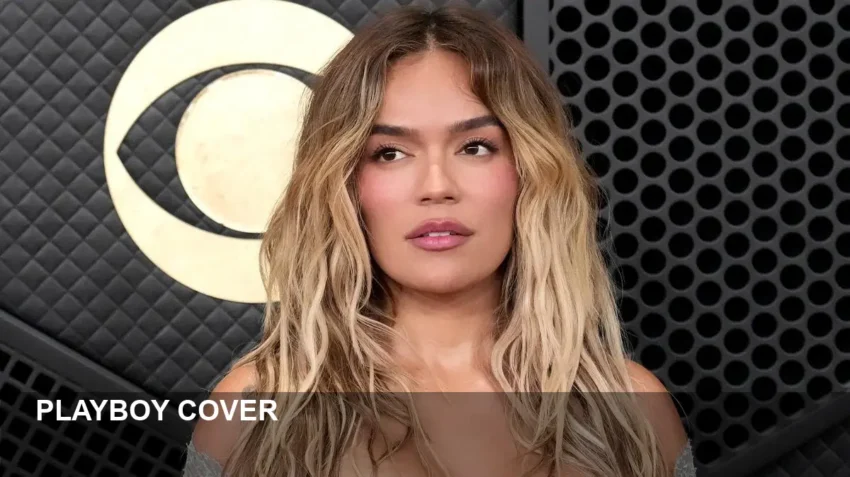
“People will say, ‘It’s better you don’t,'” Karol G told Playboy in a cover interview published April 7, explaining why she has held back from publicly denouncing U.S. Immigration and Customs Enforcement. The comment arrives just days before she makes history as the first Latina to close Coachella.
The Colombian superstar — a Grammy winner and eight-time Latin Grammy recipient — posed for the magazine in a shoot that also included a candid conversation about politics, safety and representation. In the interview she said advisers have warned that vocal criticism could put her immigration status at risk: “Because if you say the thing, maybe the next day you’ll get a call: ‘Hey, we are taking your visa away.’ You become bait, because some people want to show their power.”
Karol G framed the choice as strategic rather than silent. She told Playboy she wants any statement to have consequence, not serve as a momentary gesture (a stance she contrasted with peers who wore “ICE Out” pins at the Grammys in February). “I have a huge stage,” she said, “and that’s why I want to wait, and if someone was ever to do something to me, I want to stand firmly on my stage for my community.”
Her comments are grounded in the immediate: the Playboy issue dropped April 7, and Coachella opens April 10 with Karol G billed to close the festival — a platform she describes as “a show for my community.” She even shared a lighter note from the shoot, saying she called Sofia Vergara for advice before posing.
There is a larger pattern here: artists who are not U.S. citizens increasingly must weigh the personal legal risks of activism against the cultural power of their platforms. This calculation reshapes how immigrant communities see representation on major stages — and it can mute voices at precisely the moments they might have the most impact. What does it mean when artists must weigh their legal status against speaking out?
Industry reaction has been mixed. Some observers praise Karol G’s caution as savvy stewardship of a rare platform; others view the restraint as a symptom of a chilling effect on public protest. Social media chatter amplified both takes, with fans celebrating the Coachella milestone and critics urging more immediate solidarity with migrants facing raids and deportations.
Still, Karol G signaled she isn’t abandoning advocacy — she told Playboy she plans to “go a little harder than that” when the time is right, aiming for statements that lead to action rather than slogans. For now, the watch is on: her Coachella headline slot (this weekend) will likely be read as both a cultural win and the moment she hinted she intends to use to speak for her community.
Expect close attention from fans and advocacy groups alike — and possibly a statement from the stage. Either way, Karol G’s choice underscores a fraught reality for artists whose careers and legal status intersect with politics.