
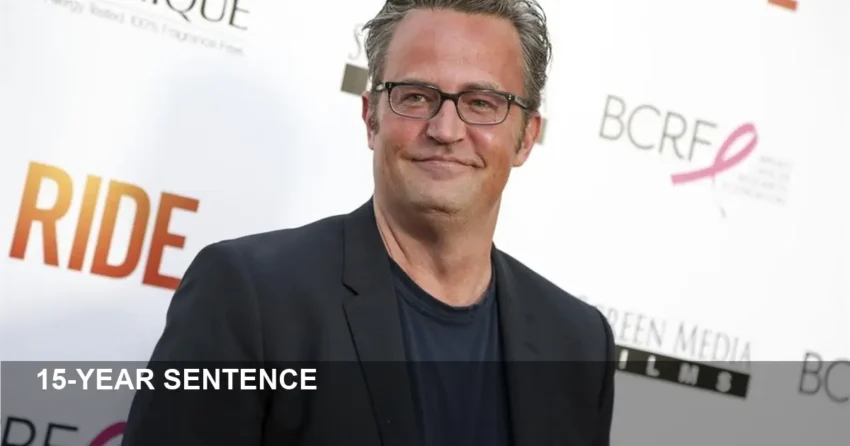
Jasveen Sangha was sentenced to 15 years in federal prison on April 8, 2026, marking the culmination of a multi-year investigation into the ketamine supply chain behind Matthew Perry’s 2023 death. This ruling underscores prosecutors’ focus on high-volume suppliers who cater to wealthy or high-profile clients — a prosecutorial emphasis that could reshape investigations into celebrity overdose cases.
U.S. District Judge Sherilyn Peace Garnett delivered the sentence after Sangha, 42, pleaded guilty last year to maintaining a drug-involved premises, multiple counts of distributing ketamine and one count tied to distribution resulting in death or serious bodily injury. Federal prosecutors described Sangha as the operator of a North Hollywood-based trafficking operation that marketed itself to an upscale clientele; court records show narcotics and trafficking paraphernalia were seized from her home during a 2024 search.
The facts the court relied on are stark: prosecutors say Sangha sold 51 vials of liquid ketamine in October 2023 to co-defendant Erik Fleming, which were then provided to Kenneth Iwamasa, Matthew Perry’s live-in assistant. According to charging documents, Iwamasa repeatedly injected Perry with that ketamine in the days before the actor’s death on Oct. 28, 2023—at least three injections that, medical examiners concluded, contributed to his death.
In court, Keith Morrison — Perry’s stepfather and a longtime Dateline correspondent — gave a brief, measured victim impact statement. “I feel bad for you,” Morrison said, addressing Sangha directly, and added, “The fact is you supplied an addict.” He spoke of the life Perry might have had, saying there was a spark in his stepson that deserved more years.
Sangha also addressed the judge, expressing remorse and calling her past choices “poor decisions.” Her defense lawyer argued that addiction — not Sangha — was the proximate cause of Perry’s death. Mark Geragos, who represented Sangha at earlier stages, criticized media labels such as “Ketamine Queen” as inflammatory; the judge, however, pointed to Sangha’s long-running operation and prior knowledge of harm when imposing a longer sentence than several co-defendants received.
Other figures tied to the case have already been sentenced: Dr. Salvador Plasencia received 30 months and surrendered his medical license, while Mark Chavez got probation and home detention after pleading guilty in a related conspiracy. Co-defendants Fleming and Iwamasa remain awaiting sentencing in coming months.
Court filings reveal Sangha took steps to erase communications after news of Perry’s death — changing Signal settings to auto-delete messages and instructing associates to delete records — details prosecutors cited as consciousness of wrongdoing. Investigations were led by the LAPD, the DEA and the U.S. Postal Inspection Service, and the case was prosecuted by Assistant U.S. Attorneys Ian V. Yanniello and Haoxiaohan H. Cai.
Will this outcome deter sellers operating in elite circles? The sentence sends a clear message: federal prosecutors will target suppliers whose distribution practices cross into patterns of serious harm (especially when tied to multiple overdose deaths). For now, the family has one more judicial milestone — and several related sentences still to come.