
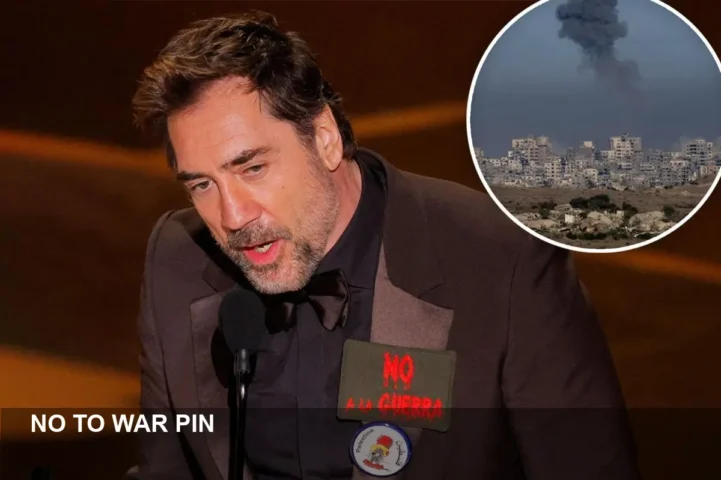
At the 98th Academy Awards, Oscar winner Javier Bardem used a presenting moment to deliver a political message that split audiences and social media. Wearing a familiar anti-war pin and a pro-Palestine symbol, Bardem said, “No to war and Free Palestine,” prompting applause inside the Dolby Theatre and immediate criticism online.
What happened on stage
Bardem presented the award for Best International Feature Film and prefaced the announcement by saying, “No to war and Free Palestine.” He wore a “No a la guerra” (“No to war”) pin — the same badge he said he wore during the 2003 awards season — and a Handala symbol representing Palestinian resistance.
His explanation
On the Oscars red carpet, Bardem told reporters the pin was “the same badge that I used in 2003 with the illegal war of Iraq,” and tied it to more recent conflicts. He also described Handala as “a 10‑year‑old boy… still 10‑years‑old and waiting to come back to his land.”
Why it matters now
The brief statement comes amid heightened international attention on conflicts in the Middle East and growing activism in Hollywood. The remark is part of an ongoing pattern of public advocacy from Bardem: he drew attention at the 2025 Emmys for Gaza and joined more than 80 creatives in an open letter earlier this year urging film festivals to condemn Israel’s actions.
Reaction: applause, praise and fierce backlash
Inside the ceremony the comment received audible applause, reflecting support from some peers. Outside the theatre the response was polarized.
- Supporters and peers applauded the moment as a conscience-driven stand against war.
- Critics on social platforms accused Bardem of using the Academy stage for a political dig and called the remark anti-Israel; some questioned why the Academy gave him the platform.
Several posts on X (formerly Twitter) criticized both Bardem and the Academy for allowing political statements during a high-profile entertainment broadcast. Others defended his right to speak and noted longtime celebrity engagement with political causes.
Context from the ceremony
The night continued with major awards for films such as Paul Thomas Anderson’s film, which won Best Picture, Director and Original Screenplay, and the Formula One drama F1 — in which Bardem appears — earned four nominations and won Best Sound. Bardem himself was not a nominee for an acting award during the evening.
What to expect next
The moment is likely to fuel further debate over political expression at awards shows and how the Academy chooses presenters. Expect more commentary from industry figures and social-media conversations in the days following the ceremony; any formal response from the Academy has not been reported. For audiences, the exchange underscores how awards broadcasts remain a platform for political statements and how divided reactions can be when entertainment and geopolitics intersect.