
What happened and why it matters
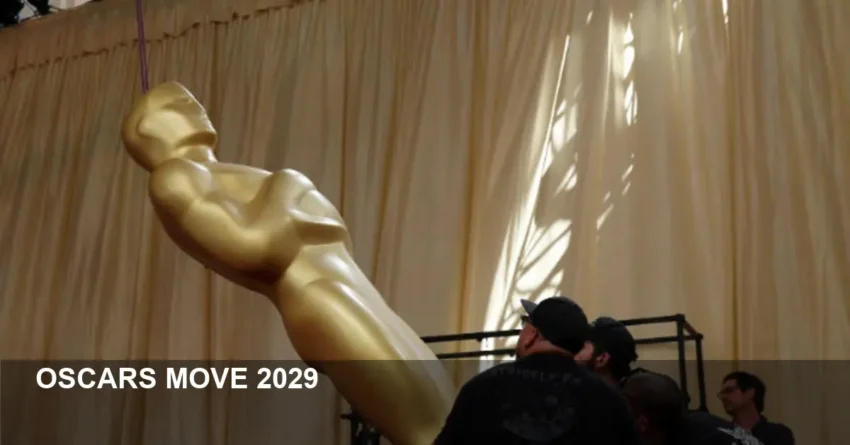
The Academy of Motion Picture Arts and Sciences has announced that the Oscars will move from the Dolby Theatre on Hollywood Boulevard to the Peacock Theater at L.A. Live beginning in 2029. The change coincides with the telecast’s shift from ABC to YouTube, marking a major reset for a ceremony closely tied to Hollywood for decades.
Who, what, when and where
The Academy struck a 10-year agreement with AEG to stage the ceremony at the Peacock Theater — a larger venue in downtown Los Angeles — beginning with the 101st Oscars in 2029 and running through 2039. The Dolby Theatre will host the show through the 100th ceremony in 2028.
The Peacock Theater, next to Crypto.com Arena inside the L.A. Live complex, opened in 2007 and has operated under names including Nokia and Microsoft Theater. Its roughly 7,000-seat capacity is about double the Dolby’s, and the complex brings hotels, ballrooms and event space into a single campus-style footprint.
Why the move now
The change answers several practical and strategic needs: more capacity as the Academy’s membership has expanded to over 11,000 voters; greater control over staging, backstage and press areas; and a tighter, self-contained layout for red carpets, ceremonies and afterparties. The shift to streaming on YouTube also signals a push for a broader global audience as traditional TV viewership has declined in recent decades.
What AEG and the Academy say
The Academy and AEG plan major upgrades to the theater’s technical systems and stage to suit the Oscars’ specific needs. In a joint statement, the academy’s CEO Bill Kramer and president Lynette Howell Taylor said, “For the 101st Oscars and beyond, the Academy looks forward to closely collaborating with AEG to make L.A. LIVE the perfect backdrop for our global celebration of cinema.”
AEG’s chief revenue officer Todd Goldstein added: “L.A. Live was built to host the moments that define culture and there is no greater global stage than the Oscars.”
Context and industry response
The Dolby Theatre was built with the Oscars in mind and has been their home since 2002, making this relocation a notable break from a long period of stability. The ceremony previously rotated among downtown venues such as the Dorothy Chandler Pavilion and the Shrine Auditorium before moving to Hollywood.
Industry observers see the move as practical — consolidating logistics in a compact entertainment district — and strategic, as the Academy adapts to changing audiences and production demands. The larger venue also opens opportunities for hospitality, sponsorship and expanded press operations.
What to expect next
- The Dolby will host the Oscars through the 100th show in 2028; the Peacock will debut as host in 2029.
- AEG will retrofit and enhance the Peacock’s stage, sound and lighting ahead of the move.
- The ceremony’s live stream on YouTube in 2029 aims to reach a global audience beyond traditional TV viewers.
For movie fans and industry insiders, the next few years will reveal how the Oscars look and feel outside Hollywood Boulevard and whether the new, larger downtown setting reshapes the event’s signature red-carpet spectacle.