
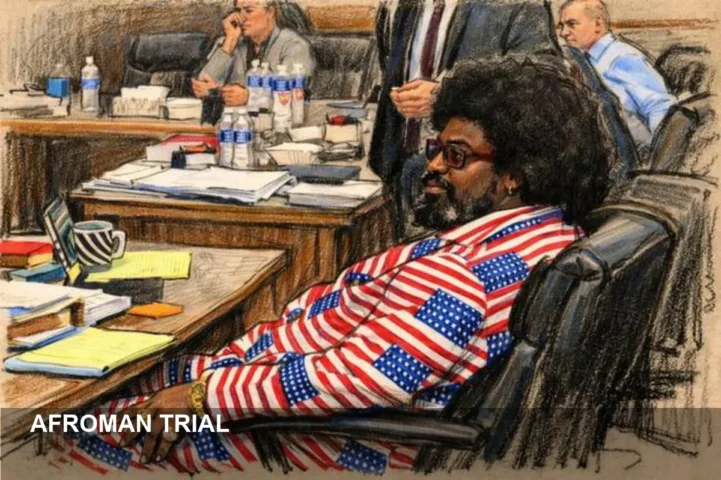
Rapper Joseph “Afroman” Foreman is facing a defamation and privacy trial in Adams County, Ohio, after turning a 2022 police raid into music and viral videos. The case, heard through March 17, 2026, has become a high-profile clash over satire, reputation and how far artists can go when responding to law enforcement.
What happened — the raid, the songs, the suit
In 2022 county officers executed a warrant based on a confidential informant’s tip alleging drugs, trafficking and kidnappings at Foreman’s home. Officers forcibly entered, damaged property and seized cash; no illegal drugs were found. Foreman said officers left his home and family traumatized, and that some cash was briefly missing before being returned.
Foreman then released a series of songs and videos about the raid, most famously a track and clip nicknamed “Lemon Poundcake.” Those recordings mock individual officers’ actions and include pointed nicknames and jokes aimed at the deputies involved. The sheriff’s office responded by suing Foreman for defamation, false light and emotional distress — claims that are now central to the trial.
What’s new at trial
- Jurors have now heard the music video for “Lemon Poundcake” after the county initially sought to exclude it from evidence.
- Court records show several original allegations by the sheriff’s office were dismissed on motion, but the claims for defamation, false light and invasion of privacy remain.
- The proceedings have drawn national attention — both for the content of Foreman’s lyrics and for broader questions about how police respond when criticized on social media and in art.
Why it matters now
The case sits at the intersection of two contemporary debates: how the law treats satire and insult by public figures, and whether law enforcement can seek civil remedies when they are publicly mocked. Artists and free-speech advocates warn that allowing lawsuits over satirical songs could chill political and cultural expression. Police accountability proponents point to the raid’s damage and the warrant’s reliance on an unnamed informant as reasons the public should scrutinize law-enforcement actions.
Social media and public reaction
Comments and clips from the trial have spread quickly online. Writer Megan Fox posted about the courtroom scenes and used the hashtag #afroman, calling the proceedings a uniquely American spectacle: “This is the most ‘MURICA trial I’ve ever seen!” and later, “This is the greatest trial on earth.”
“This is the most ‘MURICA trial I’ve ever seen! #afroman” — Megan Fox, March 17, 2026
What to watch next
The trial is ongoing. Observers will be watching how the jury treats the videos as expressive work versus actionable statements of fact, and whether the remaining claims survive further legal challenges. Outcomes here could influence future disputes where entertainers respond to alleged police misconduct with satire.
For audiences, the case is a reminder that viral songs and social posts can have real-world legal consequences — and that courtroom battles over speech and accountability increasingly play out in the public square rather than behind closed doors.