
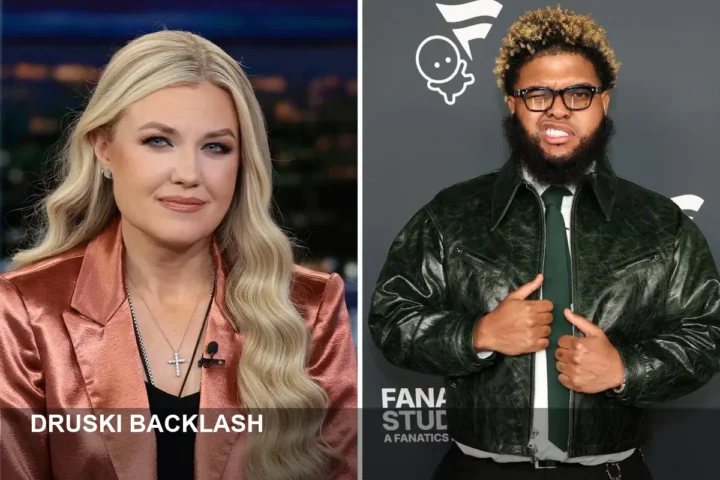
Comedian Druski (Drew Desbordes) posted a skit on March 25 in which he used prosthetics to portray a woman identified online as Erika Kirk. The clip quickly drew heavy criticism, reigniting debate over how comedy intersects with grief and public figures.
What happened
In the X post captioned “How Conservative Women in America act,” Druski appears in full prosthetics as the person social posts named Erika Kirk. That depiction, and the timing of the sketch, prompted immediate backlash from many viewers who called the bit inappropriate.
Why people are upset
Critics focused on the claim — promoted in some online threads — that the character represents a grieving widow. One widely shared reply to the video read: “I love your work bro but this ain’t it man. F*** the politics in it this is a grieving widow who tragically lost her husband over mental people. Come on man.”
Right-wing journalist Dom Lucre urged restraint in a reply, adding that creators “share a responsibility to know when something is too far,” and warning that going viral shouldn’t come “at the cost of a family this time.”
Context: this isn’t the first time Druski has drawn heat
Druski has been a lightning rod before. Earlier coverage noted a separate moment when he mispronounced NFL wide receiver Jaxon Smith-Njigba’s name during the NFL Honors ceremony — a clip that went viral and stirred debate about decorum at formal events.
That episode didn’t lead to a public escalation by Smith-Njigba, and the wider story around the player soon shifted: Adam Schefter reported that Jaxon Smith-Njigba agreed to a four-year, $168.6 million extension with the Seattle Seahawks, including more than $120 million guaranteed, making him one of the highest-paid receivers in NFL history. The contract news refocused attention on his on-field rise rather than the earlier ceremony moment.
Why it matters now
Beyond a single viral post, the reaction to Druski’s Erika Kirk portrayal touches on broader conversations about satire, identity, and boundaries. When creators lampoon people involved in recent tragedies — or are perceived to do so — audiences and fellow journalists often demand accountability and sensitivity.
Fan and industry reaction
The skit prompted a mix of condemnation and defense across social platforms. Some viewers called the clip tone-deaf; others defended Druski’s right to exaggerate for comedy. The debate mirrors past moments when viral creators drew quick backlash for sketches aimed at public figures or political types.
What to watch next
This is a developing story. Expect reactions from Druski’s team or follow-up posts from him on X, and look for further commentary from media figures and public-relations representatives for those referenced. The episode also raises questions about where mainstream brands and events draw lines for comedic content tied to real-world trauma.