
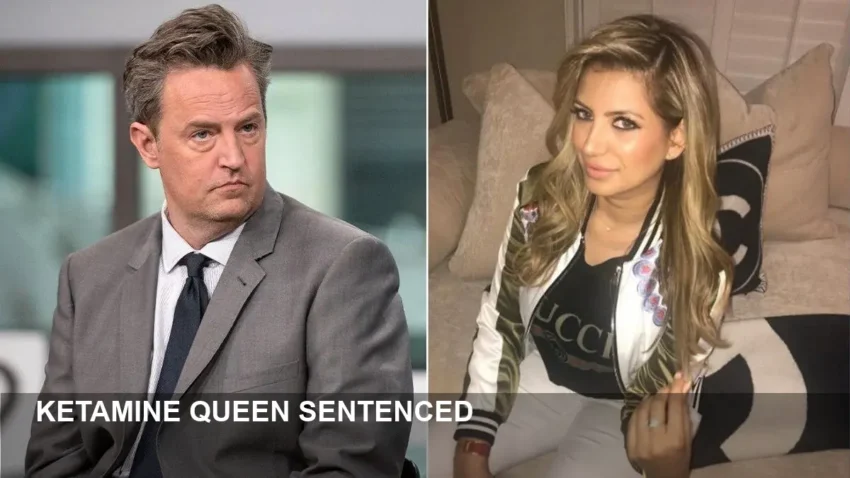
Jasveen Sangha was sentenced to 15 years in federal prison on April 8, after admitting she supplied the ketamine that federal authorities say led to actor Matthew Perry’s fatal overdose in October 2023. The penalty, imposed by U.S. District Judge Sherilyn Peace Garnett, closes another chapter in a sprawling investigation that targeted a network of dealers, medical providers and aides tied to the actor.
According to a Department of Justice press release, Sangha agreed in August 2025 to plead guilty to five federal counts: three counts of distribution of ketamine, one count of distribution resulting in death or serious bodily injury, and one count of maintaining a drug-involved premises. Prosecutors described her as operating a high-volume trafficking operation out of a North Hollywood residence and marketing herself to high-profile clients.
Prosecutors told the court that Perry’s assistant purchased 50 vials of ketamine and that one vial from that supply caused Perry’s death. An autopsy attributed the actor’s death to the acute effects of ketamine, listing drowning, coronary artery disease and the effects of buprenorphine as contributing factors. Perry, best known as Chandler Bing on Friends, died Oct. 28, 2023, at age 54.
At sentencing, family members attended and spoke directly to Sangha. Perry’s stepfather, Keith Morrison, addressed the defendant in court: “I feel bad for you. I don’t hate you. You are a drug dealer.” Those remarks underscored the complicated grief in the courtroom—anger and sorrow woven together.
Sangha’s attorney had urged leniency, pointing to her lack of prior convictions and reportedly good behavior in custody; prosecutors, however, argued that her operation funded a lavish lifestyle and placed others at grave risk. In the plea agreement Sangha also admitted to supplying ketamine in a separate 2019 overdose and to directing accomplices to delete incriminating messages—a detail prosecutors say shows conscious steps to conceal the enterprise.
She is the third of five defendants to be sentenced in the case. Earlier federal penalties were handed to a physician who admitted illegally distributing ketamine and to another medical provider who pleaded guilty; two co-defendants—identified by prosecutors as a go-between and Perry’s assistant—remain awaiting sentencing and face significant exposure under their plea deals (one faces up to 25 years, another up to 15).
Beyond the courtroom drama, this case is likely to have ripple effects in how prosecutors pursue suppliers who deal to high-profile clients. Federal authorities treating distribution-that-causes-death as a central charge signals a tougher posture toward people who not only sell illicit drugs but who do so within networks that include medical professionals and personal aides—potentially changing investigative priorities in celebrity overdose cases.
Public reaction has been sharp and immediate on social platforms and in commentary: many noted the heavy sentence as a measure of accountability, while others questioned whether prison for suppliers addresses broader issues of addiction and medicalized drug access. What happens next are the remaining sentencings and whether appellate or post-conviction motions will follow.
For now, Sangha will begin a lengthy federal term. The court has set no immediate hearing dates related to appeals; legal observers say the collateral proceedings and the remaining sentences will be watched closely for precedent in future distribution-related overdose prosecutions.