
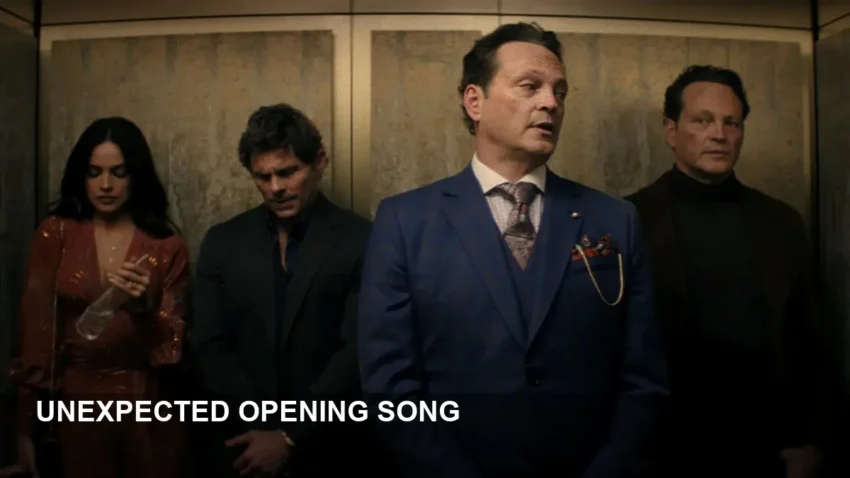
The new time‑travel film Mike & Nick & Nick & Alice begins with an unexpectedly playful choice: Ben Schwartz singing Billy Joel’s “Why Should I Worry?” from Oliver & Company. Writer‑director BenDavid Grabinski says the big, musical opener was a deliberate tonal gambit meant to set the film’s loopy, on‑its‑toes rhythm.
How the scene came together
Grabinski says the sequence started as a brief paragraph on the page — a scientist humming under his breath — but grew into a fully staged, cinematic prologue. He storyboarded every shot with artist Mark Sexton and planned the sequence as a major opening moment.
“I had to request two songs because they were used in the movie,” Grabinski explained, noting that he cleared one Oasis track especially early. Line producer Richard Middleton reportedly walked into pre‑production and asked, “Are you aware you’ve requested a song from an animated dog picture?” Grabinski’s answer: yes — and it was intentional.
Why that particular song?
For Grabinski, the song tells viewers something about the character instantly: a “dumb, smart person” who behaves carelessly. He framed the lyrics — “Why should I worry? Why should I care?” — as an ironic beat layered on top of the scene’s dramatic stakes. The character, who has “borrowed money from the mob,” sings carefree moments before meeting his doom.
Ben Schwartz initially questioned the scene’s size. As Grabinski recalls, Schwartz said it “sort of feels like it’s not much of a scene” because on paper it reads as a small moment that ends with the character being shot. After seeing storyboards and the director’s plans, he embraced it as a musical, cinematic opening.
What this means for the film’s tone
Grabinski told listeners he wanted a time‑travel movie to surprise audiences at regular intervals. The musical opener, he said, is meant to be unexpected: “I haven’t seen a time travel movie open this way… Why not have a big opening?”
The effect, according to him, is twofold: it delivers immediate levity while adding an ironic layer viewers may notice more on a second viewing. It also signals that the film will frequently pivot in surprising directions, blending humor, spectacle and sudden stakes.
Set and crew reaction
- Crew members were reportedly surprised to learn how much time was spent shooting the musical sequence; Grabinski says they spent roughly 10 hours filming Schwartz’s performance in elaborate coverage.
- Grabinski praised storyboard artist Mark Sexton as “a genius” whose visuals sold the idea to performers and the production team.
What to expect next
Grabinski’s comments frame the opener as a promise about the film’s tone rather than a one‑off joke. Audiences can expect more tonal shifts and carefully staged surprises as the story unfolds. No release dates or additional casting details were confirmed in the interview excerpts, but the sequence’s clearance notes — including Grabinski’s early move to secure an Oasis track — hint at careful musical planning across the film.
For viewers intrigued by cinema that plays with expectations, the choice to open a time‑travel picture with a Disney‑era pop number is a small but telling detail: the filmmakers want to keep you guessing from the very first frame.