
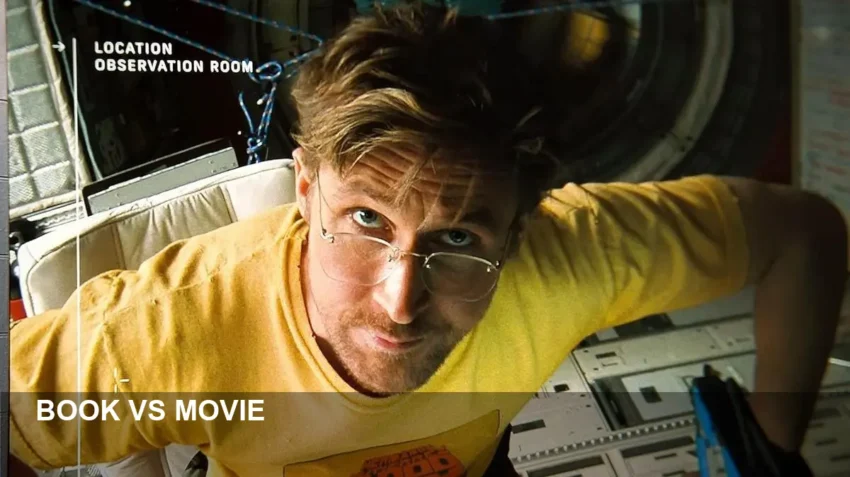
Project Hail Mary’s film adaptation has landed in theaters to strong reviews, but fans will notice deliberate changes from Andy Weir’s novel — from how Ryland Grace learns an alien language to stripped-back explanations of Earth’s preparations. These edits matter because they reshape character moments and the story’s scientific heft for a cinematic audience.
What changed: language, biology and missing scenes
One of the adaptation’s most noticeable shifts is the way Grace learns Rocky’s language. In the book Grace makes rapid progress — “Sow though the process is, I’m memorizing more of his language. I don’t need the computer as often. Though I still can’t go without it completely — that’ll take a long time.” — allowing readers more direct access to Rocky’s musical speech. The movie, however, keeps James Ortiz’s translation voice prominent; Ortiz also puppeteers Rocky, and filmmakers chose to retain that audio presence so audiences can follow conversations in real time.
Alien biology is another area of divergence. The novel offers grisly but specific detail on Eridian eating: a rocky outer shell that is removed to expose a protein-like interior, and a bodily process where an opening in the lower thorax expels previous meals. The film hints at Rocky’s odd habits but condenses or sanitizes several of those descriptions for tone and runtime.
Several structural and plot elements were trimmed or reshaped. In Weir’s book Grace names the sun-eating organism Astrophage and has a closer, earlier relationship with the concept; the film introduces the term more abruptly. The book also explores why certain people could survive long coma-like stasis, narrowing the recruitment pool, and goes deeper into Earth’s contingency planning — including Astrophage breeding strategies, a controversial plan to alter global climates, and characters like Robert Redell and Dr. François Leclerc who helped prepare the planet while the Hail Mary traveled.
Big changes that affect tone
- Grace never boards Rocky’s ship in the novel; that exploratory moment is an added cinematic beat.
- Scenes about coma-survival genetics and Earth’s large-scale engineering are reduced or omitted to keep focus on the central relationship.
- Some rescue and medical sequences around Rocky’s near-death are simplified; the novel shows Grace’s attempts to intervene in ways that complicate recovery.
Fan and industry response
Critics and audiences have largely praised the film’s scale and heart — /Film’s Ethan Anderton called it one of the best recent sci-fi movies — and merchandising tie-ins, including a Ryan Gosling LEGO minifigure, signal strong fan engagement. Book readers debate the omissions online: many appreciate the film’s emotional clarity, while others miss the novel’s deeper scientific and worldbuilding threads.
What’s next
As the film continues its theatrical run, expect discussion to focus on adaptation choices and fidelity to Weir’s details. For viewers who want the fuller explanations, the novel still contains several scenes and scientific beats that illuminate why certain decisions were made — from naming Astrophage to Earth’s desperate engineering plans.
For now, the movie offers a streamlined, emotionally driven version of the story; the book remains the place for those wanting the extra science, language-building and worldbuilding the adaptation trimmed.