
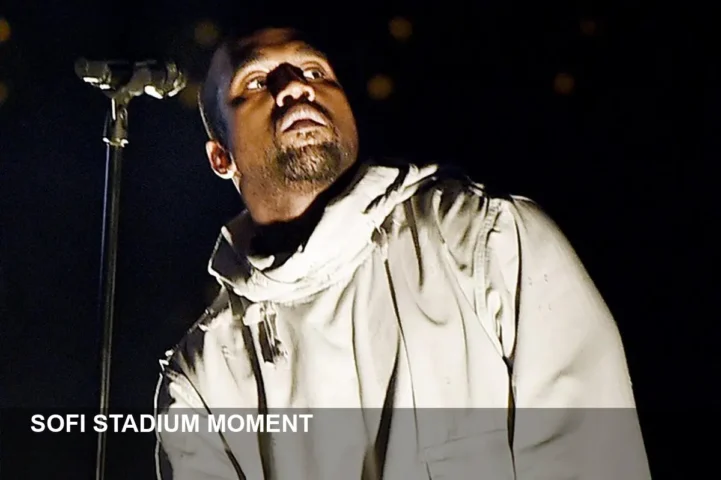
After weeks of buildup, Kanye West’s comeback at SoFi Stadium on April 1 did not go quietly — it pulsed with equal parts spectacle and interruption.
Fans in the 70,000-capacity venue saw the first of two sold-out nights turn theatrical and fractious: West stopped his set multiple times to complain about the lighting design, calling the strobe patterns “corny” and ordering technicians to revert to the earth backdrop he’d rehearsed. He also brought his 12-year-old daughter, North, onstage for a duet — a tender, widely shared moment in the midst of onstage friction.
Video clips posted across X and Instagram captured both extremes. In one clip West pauses mid-performance and scolds the production: “Yo, I don’t like when the lights move like that, like a disco s***. It don’t go with the stage.” In another, he and North walk through smoke in matching black outfits to perform together, drawing cheers from the crowd.
Those interruptions — brief but frequent — became a central storyline. At times he asked for changes live; at other moments he simply walked off until the cues were corrected. The halts ranged from a few seconds of stage direction to longer stops that punctuated songs and shifted momentum.
What happened Wednesday night is two things at once: a carefully staged comeback and a reminder that live pop spectacle still depends on exacting production detail. West’s insistence on a particular lighting aesthetic felt less like diva behavior and more like tight directorial control — an artist treating a stadium as a set (and holding crew accountable for the look). Is that discipline a mark of artistry or a risk to show consistency on a high-profile tour? The answer matters to venues and promoters who now must weigh creative demands against safety and timing.
Industry reaction was immediate. Clips amassed millions of views within hours, with fans split between delighted at the father-daughter duet and frustrated by the repeated technical stoppages. Some described the stops as part of the live experience — raw and unpredictable — while others called for smoother execution on night two. A few attendees posted praise for North’s confidence and stage presence, and commentators compared the moment to other headline artists who have used family cameos to humanize arena-scale shows (a tactic that can both broaden appeal and court controversy).
Logistics matter here: SoFi’s 70,000-seat bowl and its complex rigging mean lighting cues are not merely decorative; they’re choreographed across sightlines and broadcast feeds. Expect production teams to tighten cues and run additional rehearsals before the second sold-out performance. Promoters have not announced any changes to the schedule, and West’s team did not immediately issue a statement beyond what was said onstage (captured in social posts).
For fans planning to attend night two, bring the patience of a theatregoer and the appetite of a pop-epic — you might see an intimate duet, or you might witness a director stop his own show to demand perfection. Either way, the comeback at SoFi is turning into a case study in how modern stadium tours balance spectacle and control.