
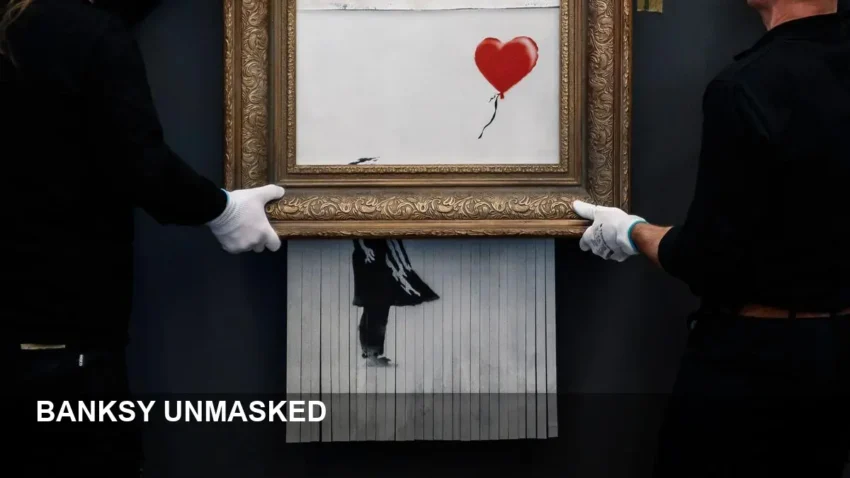
A new Reuters investigation has again linked the anonymous street artist Banksy to Robin Gunningham, a graffiti artist born in Bristol in 1973. The report revives a claim first made in 2008 and adds fresh reporting — including travel records and witness accounts from a site in Ukraine — that investigators say support the identification. The artist’s longtime lawyer pushes back, arguing anonymity protects free expression and personal safety.
What Reuters says — the latest evidence
Reuters reporters traced murals painted in the Ukrainian village of Horenka, near Kyiv, to work created quickly by two masked figures using spray cans and stencils. Witnesses told Reuters the pieces were done in minutes. Investigators say travel records and other reporting link those visits to a man named Robin Gunningham, who at times used the name David Jones.
The outlet also revisits a 2008 claim by The Mail on Sunday that first named Gunningham as Banksy and suggests that changing his name to the common “David Jones” helped confound later efforts to confirm the earlier story.
Collaboration, not one-man proof
Reuters reports that Massive Attack frontman Robert Del Naja likely worked with Banksy on projects, including the Ukraine pieces, but explicitly says Del Naja is not Banksy. Investigators frame the relationship as a collaboration rather than definitive proof that any one public figure is the anonymous artist.
Lawyer’s response: privacy and protection
Banksy’s longtime lawyer Mark Stephens told Reuters the artist “does not accept that many of the details contained within your enquiry are correct.” Stephens warned the investigation could fuel “fixated, threatening and extremist behavior” and defended anonymity. “[Working] anonymously or under a pseudonym serves vital societal interests,” he said, adding that it protects creators who speak on politics, religion or social justice from retaliation, censorship or persecution.
Why it matters now
- Attribution in street art has cultural and legal implications: names attached to works can affect value, exhibition decisions and public debate.
- The story highlights risks faced by politically engaged artists working in conflict zones, and the tension between public curiosity and an artist’s safety.
- It renews a broader conversation about how journalism, historical clues and digital records combine to unmask anonymous creators.
Public and industry reaction
The Reuters report has reignited discussion across social platforms and art circles about authorship and accountability. Some commentators greeted the reporting as vindication of earlier investigative claims; others emphasized the ethical line between legitimate reporting and endangering an individual who has long worked under a pseudonym.
What’s next
There is no official confirmation from Banksy. With the artist’s lawyer disputing parts of the report and warning of potential harms, further reporting or legal challenges may follow. For audiences and collectors, the immediate takeaway is renewed scrutiny — but not conclusive proof — about who created some of the most talked-about street art of the past two decades.
As the debate continues, the case underscores a recurring question in contemporary art: when does the identity of an artist matter more than the messages in their work?