
On March 30, Israeli police and senior Catholic leaders reached a temporary agreement ensuring that Holy Week services can proceed at the Church of the Holy Sepulchre — a resolution that preserves ancient Easter rites while responding to current security concerns.
What happened: who, when and where
The Latin Patriarchate of Jerusalem, the Custody of the Holy Land and Israel Police issued joint statements March 30 confirming a framework for Holy Week and Easter ceremonies at the Church of the Holy Sepulchre in Jerusalem’s Old City.
The deal follows a tense Palm Sunday when Cardinal Pierbattista Pizzaballa and Father Francesco Ielpo were initially prevented by police from entering the church to celebrate Mass. The authorities said mass gatherings remain restricted because of recent missile strikes and debris in the Old City tied to an operation they called “Roaring Lion.”
Terms of the agreement
- Church representatives will be allowed access to celebrate liturgies and preserve long-standing Holy Sepulchre traditions.
- Some ceremonies, including the Holy Fire, will be held in a symbolic, limited format without public audiences.
- The churches will livestream prayers and celebrations to the faithful while public gathering limits stay in effect.
Why this matters now
Jerusalem’s holy sites are governed by delicate, historical arrangements and any restriction on access quickly becomes an international diplomatic issue. The temporary settlement aims to balance the protection of worshippers with the preservation of religious freedom amid a heightened security environment.
Voices from the ground and from leaders
Israel Police described the meeting as “productive,” saying a “mutual framework has been established for upcoming Easter ceremonies” and stressing that the measures were taken “to protect worshippers of all faiths.”
The Latin Patriarchate praised the coordination, saying matters “have been addressed and resolved in coordination with the relevant authorities” and that access for church representatives “has been secured” to preserve Easter traditions.
Cardinal Pizzaballa, who was forced to celebrate at the Garden of Gethsemane on Palm Sunday, reflected in his meditation: “Today Jesus weeps once more over Jerusalem… He weeps for all the victims of a war that seems without end.”
Israeli President Isaac Herzog welcomed the agreement and reiterated Israel’s commitment to freedom of worship. Prime Minister Benjamin Netanyahu said he had instructed officials to allow the patriarch entry, citing security as the reason for the initial restrictions.
International reaction and public response
European leaders and church officials sharply criticized the earlier denial of access, calling it a violation of freedom of worship. Italy, France and the EU publicly protested, prompting diplomatic outreach even as the temporary deal was announced.
Context and what to expect next
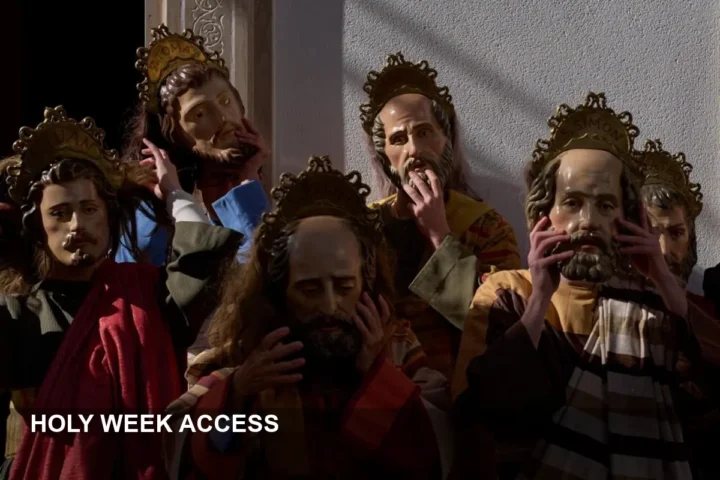
The agreement is temporary: church leaders say they will continue dialogue with authorities and hope restrictions will be lifted so the church can fully reopen to worshippers. Meanwhile, Christians around the world continue to mark Holy Week with processions, reenactments and observances — many captured in global photo galleries that document this central week in the Christian calendar.
For now, services at the Holy Sepulchre will go ahead in a limited, symbolic form and be streamed to the faithful worldwide while security concerns remain under review.