
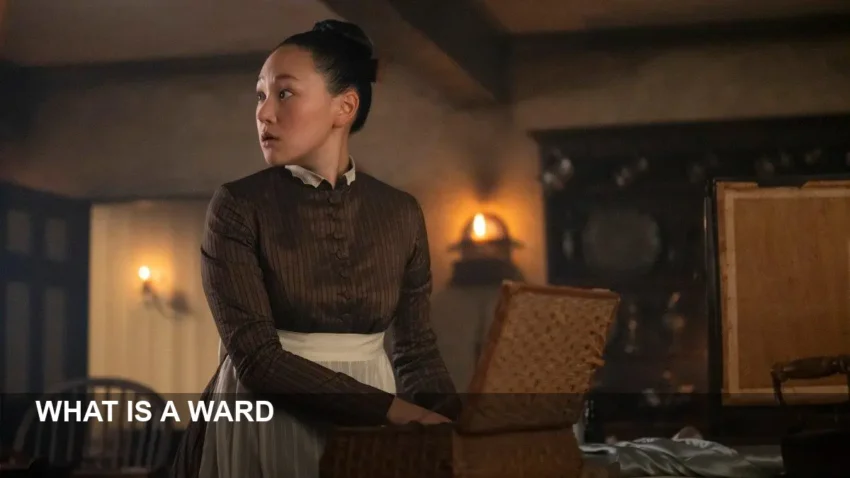
Bridgerton’s Season 4 rewrites Regency language for modern viewers by centering Sophie Baek — introduced as Lord Penwood’s “ward” — and using that status to drive her Cinderella-like arc. With Part 1 streaming and Part 2 set to arrive Feb. 26, the meaning of “ward” matters for Sophie’s social standing, her relationship with Benedict (Luke Thompson) and how the rest of the season will unfold.
What does “ward” mean in Bridgerton?
In the regency world of Bridgerton, calling someone a ward signals legal guardianship rather than blood kinship. Historically and in legal dictionaries, a ward is someone placed under another’s care — often a minor — which lets a wealthy guardian provide for a child without altering inheritance or social standing.
Why that phrasing matters for Sophie
On screen, Lord Penwood introduces Sophie to his new wife as his “ward,” not his daughter. That single word exposes the lie: Sophie is in fact his illegitimate child, raised in comfort but never acknowledged as a legitimate heiress. When Penwood dies, his widow Lady Araminta (Katie Leung) claims Sophie was left out of the will and demotes her to unpaid maid, turning legal euphemism into real-world vulnerability.
Backstory and book context
Sophie’s arc follows Julia Quinn’s novel An Offer From a Gentleman: she is the result of an affair and was brought up by Penwood to shield her from the stigma of illegitimacy. The book expands the legal detail — Penwood arranged dowries and named Araminta trustee — but the show compresses that history into a few sharp moments that explain Sophie’s lowly place in the Penwood household.
Benedict (Luke Thompson) and Sophie’s first encounters
Part 1 throws viewers into Benedict Bridgerton’s world and into Sophie’s: a masquerade moment where she’s mistaken for a lady, a dismissal from the Penwood house after a scuffed shoe, and a later country-party incident where she intervenes to stop a gentleman’s harassment. Benedict (played by Luke Thompson) steps in to rescue her and ultimately helps place Sophie as a lady’s maid to the Bridgerton family — setting up the central courtship to be continued in Part 2.
What creators say
Showrunner Jess Brownell told Tudum the season puts Sophie in survival mode: “She’s put in this situation where she has to really think on her feet every day to survive. Araminta is the lady of the house, and she has very exacting standards.” She added, “She’s a woman who has lived through a lot and by those circumstances has had to find a way to survive.”
Fan reaction and what to expect in Part 2
Viewers have been quick to embrace Sophie’s underdog story and Benedict’s protective role; social chatter has focused on the class-and-reputation stakes the word “ward” introduces. With Bridgerton Season 4 Part 2 arriving Feb. 26, audiences can expect the show to unpack more of Sophie’s legal precariousness, the power dynamics with Lady Araminta, and how Benedict navigates courting a woman who has been written out of formal inheritance.
Whether the series leans more on Julia Quinn’s original legal details or keeps the focus on character-driven scenes, the single word “ward” will keep shaping Sophie’s path — and how the ton views her — as the season concludes.