
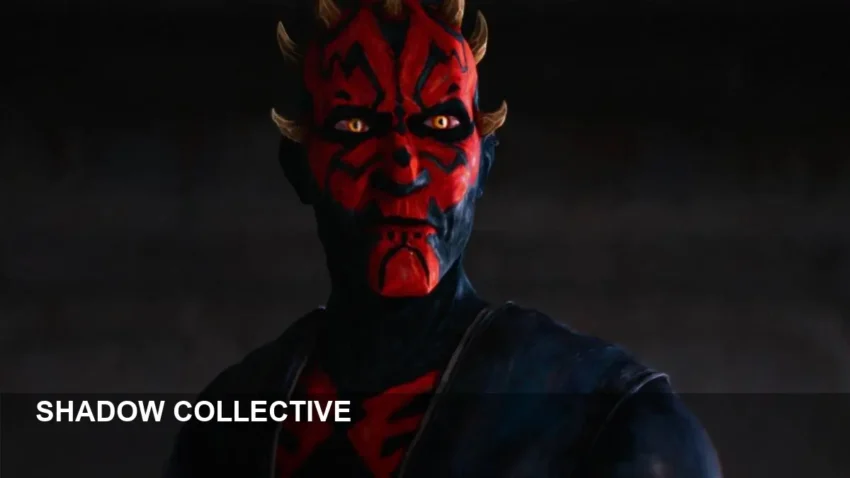
Maul just put the Shadow Collective back on the map. In episodes 1 and 2 of Maul – Shadow Lord, now streaming on Disney+, characters explicitly reference the Shadow Collective — the Clone Wars-era crime confederation that once reshaped Mandalore’s fate. This revival signals the series is threading prequel-era underworld politics into live-action Star Wars continuity.
The early episodes center on Maul’s lingering influence and the mystery around his allies. In episode 1 the Collective is name-checked, and in episode 2 a character named Rheena Sul explains to Brander Lawson that the Shadow Collective was a coalition of crime syndicates that splintered after Maul vanished “following the war.” That description lines up with the group’s origin on The Clone Wars: Maul allied with Savage Oppress and elements of Mandalorian Death Watch to unite factions such as Black Sun, the Pyke Syndicate and the Hutts, using that combined force to seize control of Mandalore after Maul won the Darksaber.
But the story didn’t end there. Bo-Katan Kryze and other Mandalorians fought back; Darth Sidious later arrived and killed Savage, and the Shadow Collective fractured further — the Hutts reportedly left and Crimson Dawn eventually slid into the vacuum. The Siege of Mandalore, depicted at the end of The Clone Wars, culminated with Ahsoka Tano defeating Maul and his capture, after which the Collective dispersed. Importantly, Maul later resurfaces in Solo as Crimson Dawn’s shadowy mastermind — a continuity wrinkle the new show acknowledges without fully resolving (Solo takes place later on the Star Wars timeline than Maul – Shadow Lord).
So why does this matter now? Reintroducing the Shadow Collective gives the series a tidy bridge between animated-era events and live-action criminal networks fans have seen before — and it reopens questions about Mandalore’s political scars and who controls its underworld. Could the series use the Collective to explain lingering power shifts on Mandalore or to connect Maul’s post-Clone Wars reach to later syndicates? That seems likely.
Fan reaction has been immediate on social platforms: many viewers praised the show for honoring Clone Wars lore while others noted the series’ careful restraint — it teases big links without handing out definitive answers. Industry watchers will be listening for further confirmation in upcoming episode synopses from Lucasfilm and Disney+ (official episode descriptions and credits remain the primary on-screen sources for these plot details).
What’s next: Maul – Shadow Lord will reveal more as new episodes drop. Expect the series to either deepen the Collective’s role — perhaps showing Crimson Dawn’s absorption or a new criminal alignment — or to use the mention as a setup for broader Mandalore-focused storytelling. For now, the return of the Shadow Collective is a deliberate nod to The Clone Wars and a promise that the show’s underworld intrigues are far from finished.