
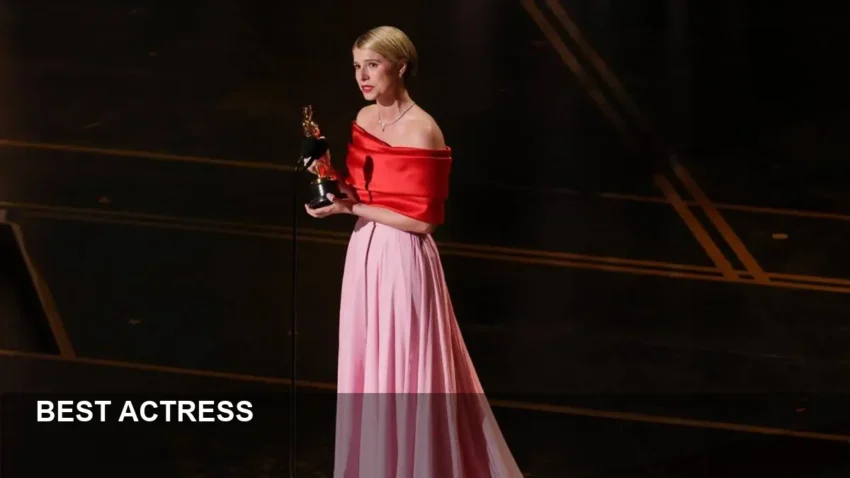
Jessie Buckley won the Best Actress Oscar at the 98th Academy Awards on March 16, 2026, for her portrayal of Agnes in Chloé Zhao’s Hamnet — a victory she dedicated to mothers and to the women who create against the odds. The win is the film’s lone trophy from eight nominations and marks a defining moment in Buckley’s career.
What happened: the win and the speech
On the night of the Oscars in Los Angeles, Buckley accepted the Best Actress statuette for her role opposite Paul Mescal in Hamnet. In her acceptance speech she said, “We all come from a lineage of women who continue to create against all odds,” and noted the timing: it was Mother’s Day in the U.K. She also told director Chloé Zhao, “To know this incandescent woman, and journey to understand the capacity of a mother’s love is the greatest collision of my life,” and dedicated the award to “the beautiful chaos of a mother’s heart.”
Why it matters now
Hamnet arrived at the Oscars with eight nominations — including Best Picture and Best Director — but Buckley’s win was the film’s only victory. The award caps a season that already included a Golden Globe Best Actress in a Drama for Buckley and cements her transition from supporting nominee to leading Oscar winner; she was previously nominated in 2021 for Best Supporting Actress for The Lost Daughter.
About Hamnet and the team behind it
Directed by Chloé Zhao, who co-wrote the screenplay with Maggie O’Farrell (author of the novel), Hamnet imagines the grief felt by William Shakespeare’s family after the death of their son. The cast includes Paul Mescal, Noah Jupe and Jacobi Jupe, Emily Watson and Joe Alwyn. Scholars and audiences have noted the film’s exploration of loss and its suggested links between Shakespeare’s life and the later play Hamlet.
Industry moments and awards season context
Beyond Buckley’s win, the 2026 ceremony produced several milestone moments: the film’s credits contributed to producer Steven Spielberg reaching a new record for Best Picture producing nominations, and other high-profile nominees and veterans were recognized across categories. Still, Hamnet’s single win — out of eight nominations — kept the evening focused on Buckley’s performance.
Fan and industry reaction
Social platforms filled quickly with congratulations from peers, critics and fans praising Buckley’s emotional, layered turn as Agnes. Industry insiders noted the awards-season lift films often receive after an acting Oscar; distributors and streamers typically see renewed interest in nominated titles, and Hamnet is likely to gain fresh viewership and press as a result.
What’s next
- Buckley is expected to appear in post-awards interviews and festivals, and the victory will shape the conversation around her upcoming projects.
- Hamnet may see an audience boost in cinemas and on digital platforms as viewers seek out the film behind the praise.
- Watch for additional awards-season retrospectives and industry analysis in the days after the Oscars, as studios and filmmakers assess the ceremony’s impact.
On a night of many nominations and a few headline-making records, Jessie Buckley’s Best Actress win stood out as the evening’s emotional and critical high point — a performance and a speech that connected personal family history to a wider story about women’s lives on screen.