
What happened — and why it matters
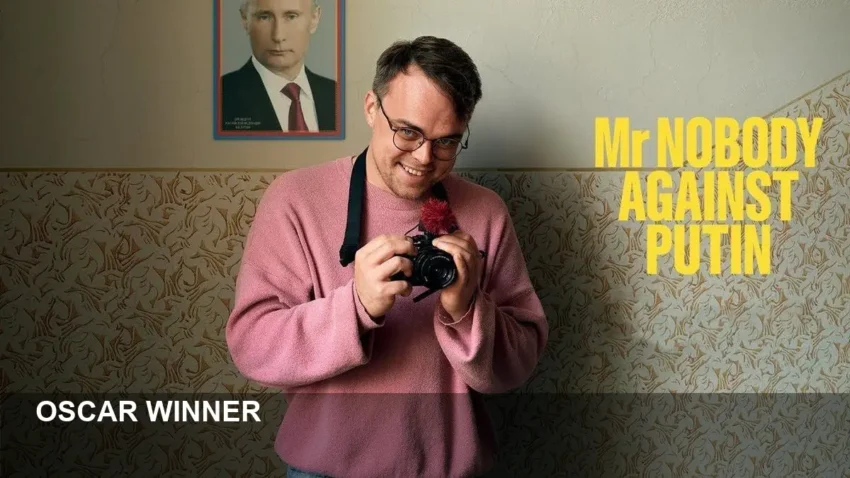
Mr Nobody Against Putin, the documentary built from a Russian schoolteacher’s covert footage, won the 2026 Academy Award for Best Documentary Feature and turned its directors’ acceptance speech into a pointed political appeal. The film’s Oscar win on March 15, 2026, capped a run that included a BAFTA victory and sent the movie straight into conversations about propaganda, moral responsibility and how small acts of dissent can matter.
What the film shows
The film centers on Pavel “Pasha” Talankin, a Karabash elementary-school videographer who began secretly recording lessons and assemblies after Russia’s invasion of Ukraine. Talankin captured pro-war classroom rituals, paramilitary visits and the recruitment atmosphere that transformed schools into sites of state messaging.
Talankin told reporters he loved his students but “didn’t want to be a pawn of the regime,” and kept the recordings as what he described as evidence. Facing the risk of arrest, he ultimately left Russia on a staged holiday and is now in exile.
Oscar night: speeches and fallout
Onstage at the Oscars, co-director David Borenstein framed the film as a cautionary story. “’Mr. Nobody Against Putin’ is about how you lose your country,” he said, arguing that “countless small little acts of complicity” erode democratic life. He added, “We all face a moral choice,” and told the audience that “even a nobody is more powerful than you think.”
Talankin used his moment to make a direct plea on behalf of children living under conflict: “For four years, we’d look at the sky for shooting stars to make a very important wish,” he said, translated to English. “But there are countries where instead of shooting stars, they have shooting bombs and shooting drones. In the name of our future, in the name of all of our children, stop all of these wars now.”
Borenstein’s remarks also drew links to concerns in the United States about media concentration and government power; he later referenced those parallels in the press room, where he spoke about how quickly democratic erosion can take hold.
Industry and audience reaction
The award unexpectedly beat contenders such as The Perfect Neighbor and generated wide social-media buzz around the film’s footage and the speeches’ broader warnings. Critics praised the movie as both a document of life inside a propaganda-driven institution and a story of quieter, high-risk resistance.
Where to watch
In the U.K., the BBC has made Mr Nobody Against Putin available on BBC iPlayer for free; the broadcaster said the special will be offered “for over a year.” Kino Lorber released the film in theaters and on streaming platforms as well, widening access internationally.
Viewers outside the U.K. may need to adjust location access to reach BBC iPlayer; some viewers use virtual private networks (VPNs) to view region-restricted streams, though availability can vary by service and local rules.
What comes next
Expect continued festival and awards-season attention, follow-up interviews with Talankin and Borenstein, and renewed public discussion about education, propaganda and accountability. The film’s win has already amplified debate over how societies teach history and loyalty to future generations — and the filmmakers made clear they see the movie as part of a larger call to act.