
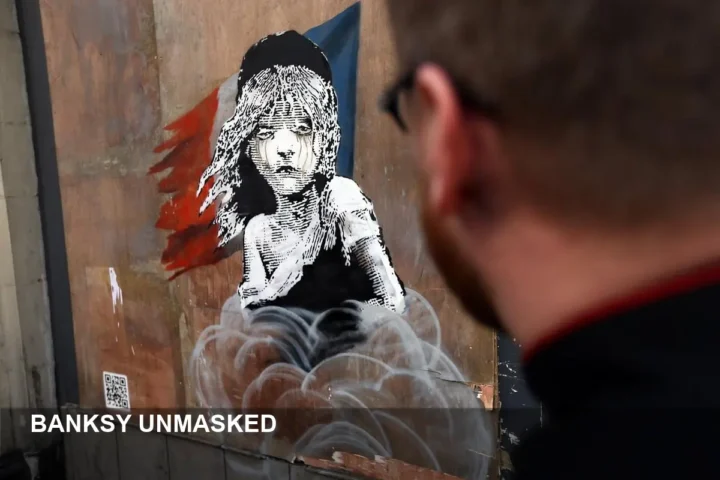
The mystery surrounding Banksy grew louder this week after a major Reuters investigation concluded that the anonymous street artist is, in fact, Robin Gunningham. The report uses travel records, court documents and witness accounts to tie Gunningham to works credited to Banksy — a finding that has reignited debate about secrecy, art and privacy.
What Reuters reported
Reuters says its reporting established “beyond dispute” that Robin (also reported as Robert) Gunningham — a Bristol-born man who later used the name David Jones — is the person behind Banksy. Investigators pointed to travel details connected to Banksy’s 2022 murals in Ukraine, a signed confession connected to a past New York graffiti arrest, and eyewitness testimony as key pieces of evidence.
Photos and name changes
The investigation also highlights two rare photographs linked to Gunningham: a 2004 image taken in Jamaica and a school photo published in 2008. Reuters reports similarities between the images and other archival footage, and notes Gunningham legally changed his name to David Jones in 2008 — a move the piece says helped mask his identity.
Responses and legal questions
Pest Control, the company that handles Banksy’s official business, told Reuters the artist “has decided to say nothing.” Lawyer Mark Stephens, who has represented aspects of the Banksy operation, has publicly pushed back on parts of the reporting, arguing that forcing a reveal would harm privacy and could create safety risks.
Why this matters now
Banksy’s anonymity has been central to his public persona for decades. From surprise political murals to provocative auction moments, the artist’s mystique has shaped how audiences and markets perceive his work. Confirming a legal name could influence collectors, legal exposure for past illegal street work, and how the public engages with new pieces.
Fan and cultural reaction
Online reaction has been split. Some social-media users and art fans voiced fatigue — noting this is one of several times a different name has been floated as Banksy — while others said they prefer the mystery. Clips of past interviews and resurfaced claims (including an old BBC clip and a Newsweek recounting where “It’s Robbie” was reportedly said) have circulated again as people re-examine old material.
What’s next
Expect more scrutiny and conflicting coverage. Reuters’ report may prompt legal challenges aimed at protecting anonymity or, alternatively, further confirmation if private documents surface. For now, Pest Control’s silence and lawyers’ warnings leave the core question unsettled for many: does knowing the name change how we value the work?
Whether the latest revelations will stick or fade like earlier theories remains to be seen. But for now the story has pushed one of modern street art’s oldest mysteries back into the spotlight.