
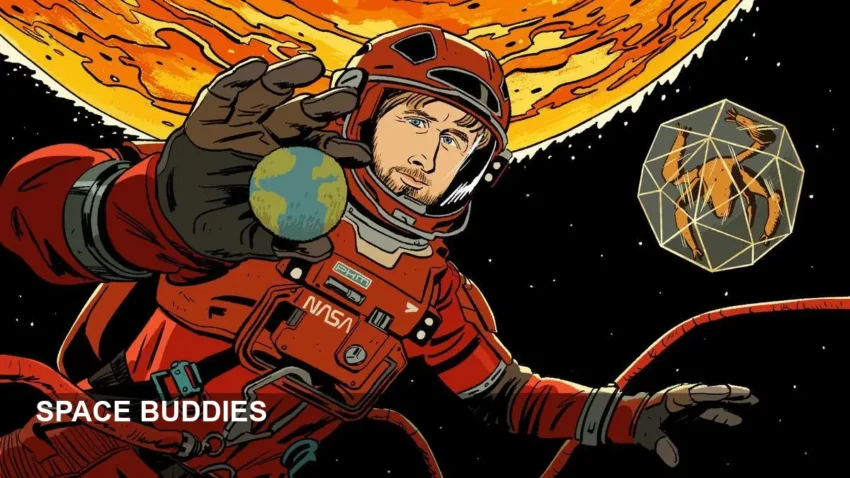
Project Hail Mary arrives in theaters March 20 as a crowd-pleasing space adventure that pairs science with sitcom beats — and it matters because big-studio spectacle that trusts actual science is still rare.
What happened
Directed by Phil Lord and Christopher Miller and adapted by Drew Goddard from Andy Weir’s novel, Project Hail Mary follows Ryland Grace (Ryan Gosling), a schoolteacher-turned-accidental-astronaut who wakes alone aboard a ship with a sun-eating microbial threat called Astrophage threatening Earth and other stars.
The film, released by Amazon MGM, opens March 20 in regular and IMAX screenings. It runs roughly 156 minutes and is rated PG-13.
Who’s who on the mission
Gosling anchors most of the screen time as Grace, a reluctant hero whose memory loss structures the film’s flashbacks and reveals. Sandra Hüller plays Eva Stratt, the iron‑fisted scientist who recruits him, while Lionel Boyce, Ken Leung and Milana Vayntrub appear in supporting roles tied to the mission’s backstory.
Grace’s most unexpected ally is an alien engineer from Erid, nicknamed Rocky — brought to life by puppet work and performance credited to James Ortiz — who becomes his interspecies collaborator. The two build a rudimentary translator and a friendship at the center of the movie’s emotional stakes.
Creative team and craft
Greig Fraser’s cinematography gives the space sequences scale (with IMAX presentations for outer-space scenes), Daniel Pemberton provides a buoyant, unusual score, and Joel Negron’s editing keeps the film moving through scientific problem-solving and comedy beats.
Why it matters now
Project Hail Mary arrives at a moment when audiences still celebrate science on screen. Like The Martian before it, this film foregrounds the scientific method and cooperative, international problem-solving while remaining broadly accessible — reducing complex concepts into digestible steps without losing rigor.
The story’s tone — an often jokey, crowd-pleasing approach from Lord and Miller — makes high-stakes science feel human and hopeful, offering a counterpoint to more solemn space epics.
Critical and audience response
Reviews coalesce around the film’s heart: the friendship between Grace and Rocky. Critics praise Gosling’s ability to carry long stretches alone on screen and Hüller’s dry, scene-stealing performance. One memorable line from the film captures Rocky’s blunt warmth: “Rocky happy not alone.”
Some critics take issue with the film’s persistent quippiness and tonal unevenness, describing it as an “insistent crowd-pleaser” whose levity sometimes blunts emotional blows. But many find the balance of humor, earnestness and clear scientific curiosity rewarding — and say repeat viewings reveal more of the film’s mechanics and emotional payoff.
What to expect
- Theatrical-only rollout begins March 20; IMAX screenings include expanded space sequences.
- Family-friendly PG-13 rating makes it accessible to teens and adults interested in science and adventure.
- Expect word-of-mouth driven box office and conversation about its science-first approach; streaming windows will be announced by Amazon MGM later.
In short, Project Hail Mary is both a science lesson and a buddy comedy in space — messy, funny, occasionally sentimental, and built around an improbable but affecting friendship that may stick with viewers long after the credits roll.