
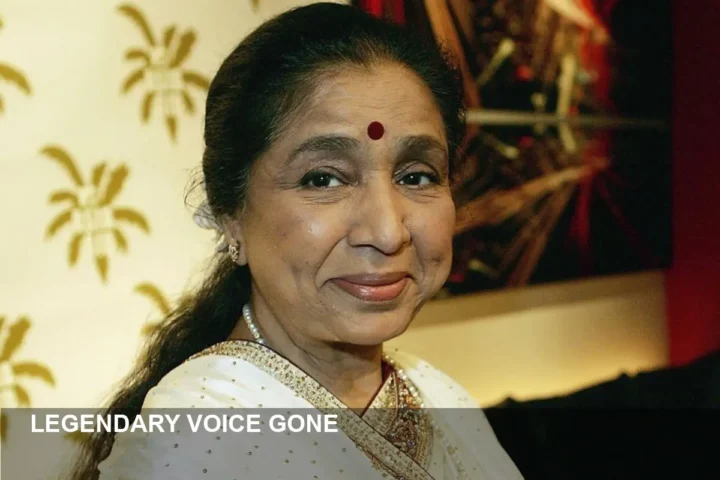
Asha Bhosle just died on April 12 in Mumbai, marking the end of a seven-decade run that reshaped Bollywood music and made her voice instantly recognizable across generations. Her death is likely to send a tidal wave of streams and tributes — a reminder of how a single artist can anchor a nation’s soundtrack.
Doctors at Breach Candy Hospital in south Mumbai said the 92‑year‑old singer suffered multiple organ failure after being admitted with a chest infection, Dr. Prateet Samdani told reporters. Her granddaughter, Zanai Bhosle, posted on social media that Asha had been hospitalized late Saturday and was under intensive care. Her son, Anand Bhosle, told the media that last rites were scheduled for Monday.
Born Asha Mangeshkar on Sept. 8, 1933, in Sangli, she rose from a musically gifted family to become one of India’s most prolific playback singers. Over the course of an extraordinary career she recorded some 12,000 songs (some estimates hover near that figure), moving effortlessly from classical and ghazals to cabaret and Western‑tinged pop. Her palette—restless and inventive—set her apart from contemporaries, including her elder sister Lata Mangeshkar, the often-referenced “Melody Queen.” Who else could turn a yodel or a jazz-tinged chorus into an indelible earworm?
Industry figures and political leaders paid swift tribute. Prime Minister Narendra Modi said in a social media message he was “deeply saddened” and praised her contribution to India’s cultural heritage. Musicians echoed the sentiment: composer-singer Shankar Mahadevan, in a filmed message, called Asha “our dearest Asha Tayi” and likened her to the embodiment of Goddess Saraswati, saying her music will “never ever perish from the face of the earth.”
Asha’s personal life was often in the public eye. Married first in 1949 (that union ended in separation in 1960), she later married composer R.D. Burman in 1980. She is survived by her son Anand and several grandchildren. Her relationship with Burman produced some of her most adventurous recordings, blending Indian melody with pop, funk and film drama.
Fans poured onto social platforms within hours — streaming playlists featuring her greatest hits surged, tribute videos proliferated and younger artists posted short performances in her honor. Historically, the deaths of defining performers have produced measurable spikes in catalog listening and licensing interest; expect platforms and film producers to revisit her back catalogue for reissues, remasters and documentary projects. That industry ripple is an often-overlooked part of a star’s legacy and one that will shape how future audiences discover her work.
What happens next: family members will oversee the funeral rites on Monday, and several cultural organizations and broadcasting networks have said they will air special programming. Officials may also consider state-level honors—nothing has been announced yet. In the coming days, tributes, archival footage and interviews will likely reintroduce younger listeners to the breadth of a singer who, for almost eighty years, carried a piece of Bombay’s — and India’s — musical identity in her voice.